
 Image 1 of 2
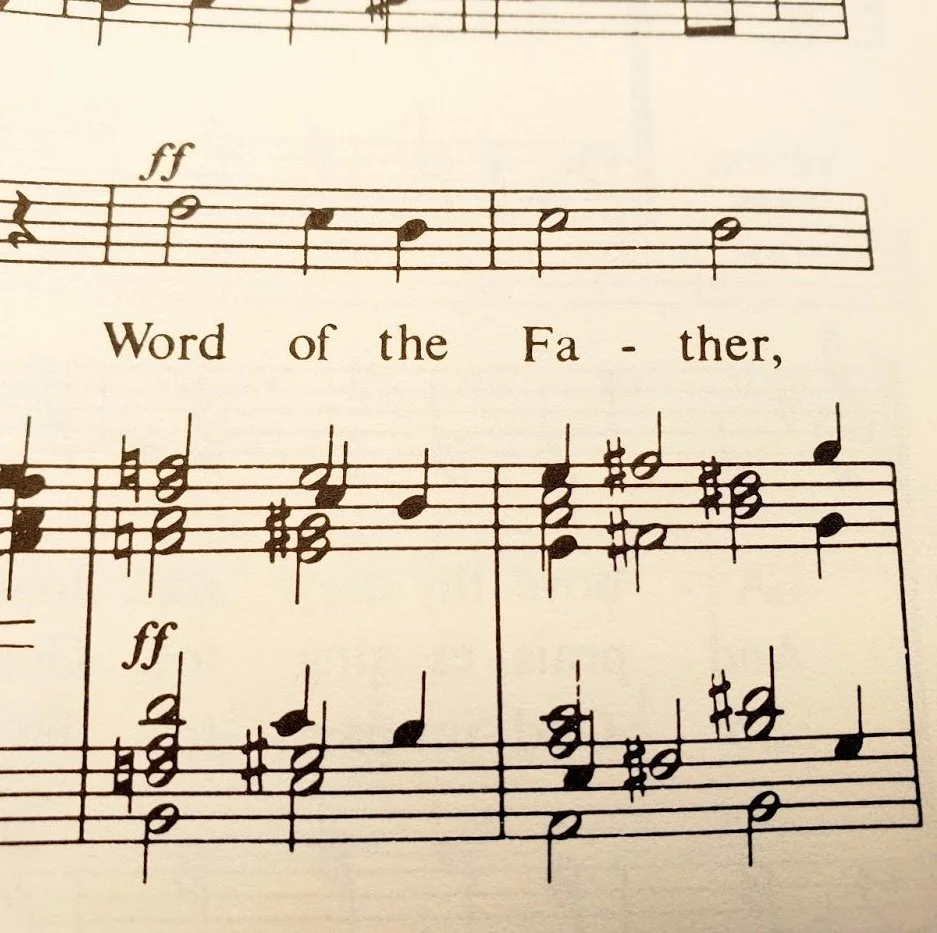 Image 2 of 2
J. F. Wade, arr. David Willcocks
“O Come, All Ye Faithful” is of uncertain origin. Although the first printed edition of this tune came from a 1751 compilation by John Francis Wade, the text existed long before that and is referenced in literature as early as 1542. The carol has experienced many transformations on its way to becoming the classic it is today, including a meter change from 3 to 4.
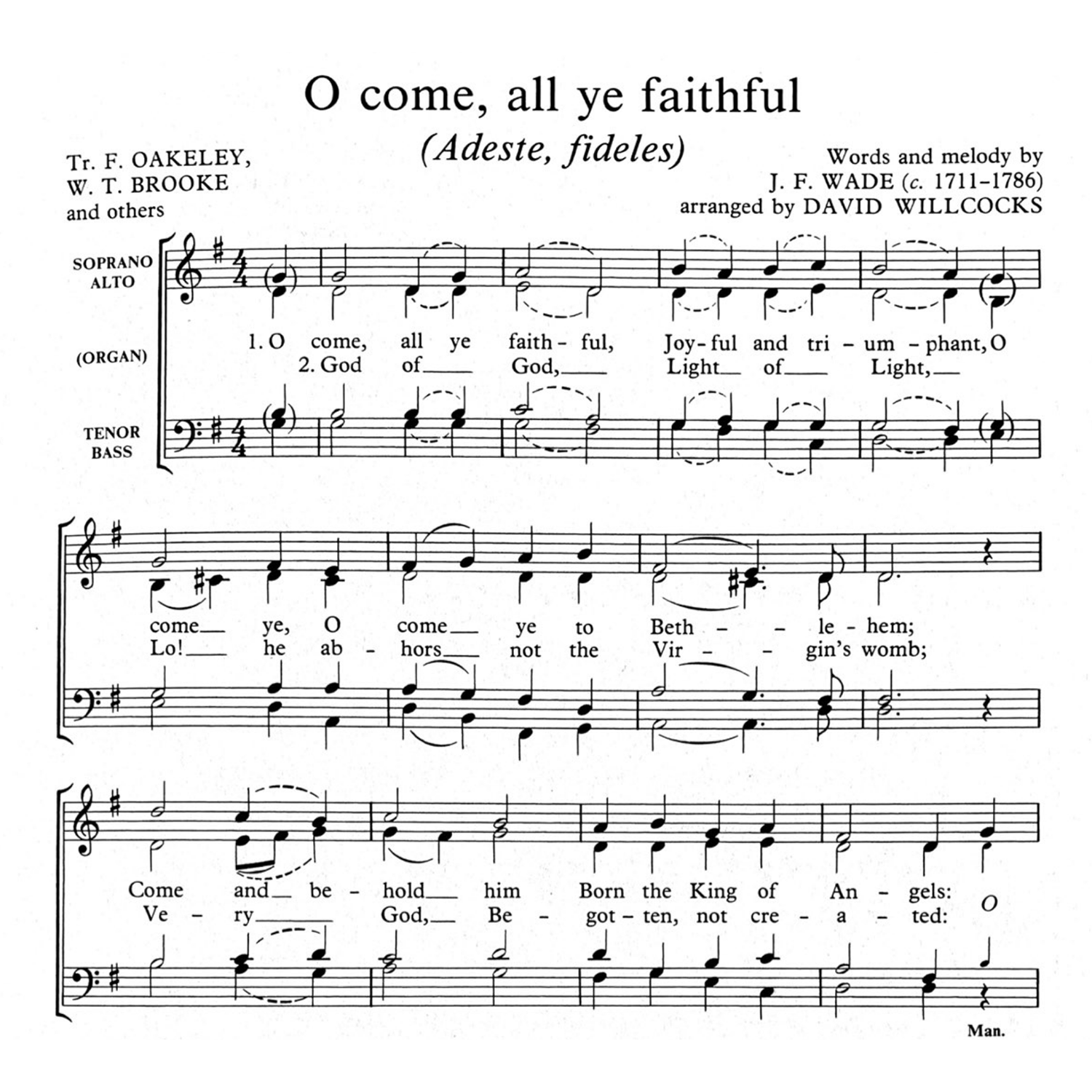
Sir David Willcocks, the longtime Director of Music at King’s College, Cambridge, made this arrangement of “O come, all ye faithful” in 1961, and it has quickly become the most commonly performed arrangement, with a great fanfare and soaring descant. It has also become known for “The Chord,” on the word “Word” in Verse Seven’s “Word of the Father.” The New York Times even wrote an entire article about it a few years ago. In this chord, the tonality shifts from major to a minor tone, and Willcocks altered two notes and added a seventh, or “leading tone.” In music, this is called a half-diminished seventh chord, and it comes at us like a lightning bolt because it’s outside the normal harmonic structure. Willcocks then unexpectedly continues the verse harmonically, leading to the glorious ending where the organ opens up all the stops, and the chorus sings at full voice. For many people, this arrangement is the pinnacle of the holiday season.
J. F. Wade, arr. David Willcocks
“O Come, All Ye Faithful” is of uncertain origin. Although the first printed edition of this tune came from a 1751 compilation by John Francis Wade, the text existed long before that and is referenced in literature as early as 1542. The carol has experienced many transformations on its way to becoming the classic it is today, including a meter change from 3 to 4.
Sir David Willcocks, the longtime Director of Music at King’s College, Cambridge, made this arrangement of “O come, all ye faithful” in 1961, and it has quickly become the most commonly performed arrangement, with a great fanfare and soaring descant. It has also become known for “The Chord,” on the word “Word” in Verse Seven’s “Word of the Father.” The New York Times even wrote an entire article about it a few years ago. In this chord, the tonality shifts from major to a minor tone, and Willcocks altered two notes and added a seventh, or “leading tone.” In music, this is called a half-diminished seventh chord, and it comes at us like a lightning bolt because it’s outside the normal harmonic structure. Willcocks then unexpectedly continues the verse harmonically, leading to the glorious ending where the organ opens up all the stops, and the chorus sings at full voice. For many people, this arrangement is the pinnacle of the holiday season.