
Acclaimed Composer of “This Mourning” For Chorus and Orchestra, Which TWC Performs November 16 at The Kennedy Center Concert Hall
Wherever we’re from, probably each one of us over age 25 can remember exactly where we were the morning of September 11, 2001.
For The Washington Chorus (TWC), September 11 hit close to home. Being a D.C.-based musical ensemble where many of our singers work for the federal government, several singers in the Chorus had personal relationships with individuals or families whose lives were lost in the Pentagon on 9-11.
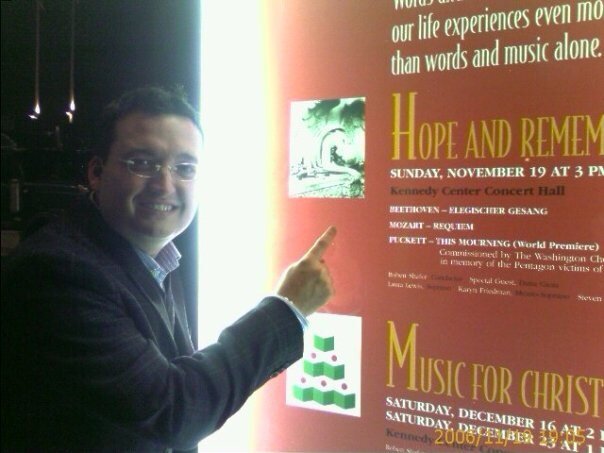
So the Chorus did what any great organization would do: our leadership team at the time (Music Director Robert Shafer and Executive Director Dianne Peterson) reached out to an extraordinary local composer and commissioned him to write a new work to honor those lost on September 11, and to evoke hope for the future of our country and our world.
Joel Puckett was the composer that TWC called for this commission, and the work that he composed – “This Mourning” for chorus, orchestra, and tenor soloist, set to texts of Emily Dickinson, Thomas Bailey Aldrich, and excerpts from the Requiem Mass text – was premiered by TWC in 2006 to breathless reviews.
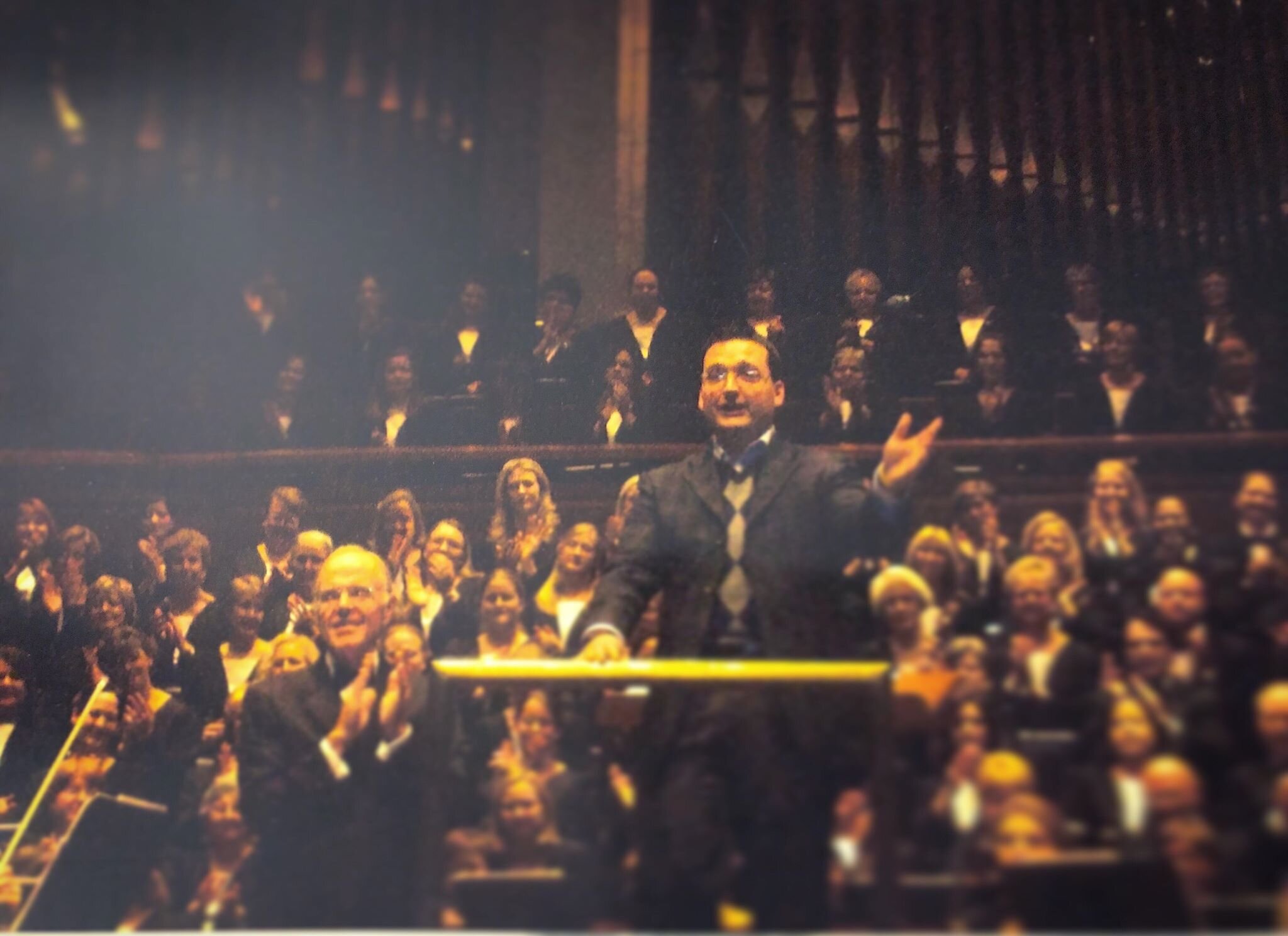
On Saturday, November 16, 8 pm at the Kennedy Center Concert Hall, TWC offers up our second ever performance of the work, again alongside the Mozart Requiem and with additional new and old works by Jennifer Higdon and Josef Rheinberger.
We recently spoke with composer Joel Puckett to learn more about his process in composing “This Mourning,” and what makes this Saturday’s TWC concert one of DC’s unmissable fall 2019 season live music events.
Stephen Marc Beaudoin: Joel Puckett, it is so nice to have some time with you!
Joel Puckett: The pleasure is all mine, Stephen.
SMB: Well, all of us at The Washington Chorus are thrilled to be performing your extraordinary work “This Mourning” once again, after commissioning and premiering it in 2006. I want to go back to the origins of this piece. How did this all happen? I’d love to hear more about how this incredible musical work came to be. How did TWC find and approach you for the commission, and what sort of direction or guidance were you given by TWC as you created it?
JP: By 2006, I had known Bob Shafer for a while and had already written a piece for his Shenandoah Conservatory group’s European tour a few years before. So when he approached me with the idea of my writing a piece for TWC with orchestra, I jumped at the chance.
SMB: And we’re so glad that you did! Now let’s talk more about the subject matter. As you referenced, responding in a humane and sensitive way to the tragedies of September 11th is what inspired this piece. Composer John Adams took his own approach to this difficult and charged task with his haunting work “On the Transmigration of Souls.” We’d love to know more about how you approached writing a musical work in response to such a difficult, devastating, and emotionally charged moment in history.
JP: John’s approach was to be very specific as to 9/11; even embedding the names of the victims into the piece. Having heard the premiere of his work just before I started mine, I wanted to do something 180 degrees from his. So I decided to speak more broadly about grief and loss. Once that decision was made, I was on the lookout for texts that would allow me to tell a story about loss, healing, and hope.
SMB: The orchestration – how you’ve used the instruments of the orchestra to create colors and effects - for this work is absolutely stunning. And you have included something unusual – a consort of crystal glasses to be played. Why are those glasses in the work? What do they represent?
JP: The curious thing about the Mozart Requiem is that it has no flutes in the orchestra. So, in many ways, the upper frequency spectrum was cut off from my palette. I knew I wanted to open that up somehow but didn’t know how. But then I remembered a moment from a piece by one of my favorite composers, Joseph Schwantner. Joe famously uses a small concert of glasses in several pieces from the late 70s and early 80s to evoke the otherworldly. … and the mountains rising nowhere and Aftertones of Infinity, for some breathtakingly excellent examples!
I realized that if I could convince TWC to allow me to use a huge number of glasses—30-40!!!—on a cluster of pitches, I would be able to color the end of the piece with the reverberations—or to be more direct—the traumatic hangover of the events of that foul morning, 11 September, 2001.
That seven note chord in the crystal glasses hangs over the entirety of the last movement just the way our memories of that morning color almost every moment since.
SMB: For those that may be coming to the concert because they’re primarily familiar with the Mozart Requiem, how would you describe the link, the connection, between the Mozart Requiem and your work “This Mourning”? What should audience members listen or look for as important connections between the two works?
JP: Look, the Mozart Requiem is in the hall of fame with good reason. I am just as in awe of it as every single member of your audience will be on Saturday. I took the sense of grief mixed with hope found within his work as a source of inspiration for This Mourning. I even make a nod to the great master by having the choir chant the text of the Lux aeterna in the first movement as Mozart never got the chance to set it in his. Süssmayr, of course, finished Mozart’s work with the Lux aaterna text by reusing the Mozart’s opening of the Mass, but I still found a great place to start when conceptualizing This Mourning.
SMB: What do you hope that the audience – most of whom will be hearing this work for the first time on November 16th at the Kennedy Center Concert Hall – will experience when they hear this work performed live by TWC?
JP: I hope that the audience will participate in a collective experience of grief, healing, and hope. I find, more and more, that live concerts are one of the last events on earth where we can all agree to turn off our devices and experience something specific to a place and time; all together: listening, grieving, hoping.
That’s what I hope for on Saturday.
SMB: Joel, thank you! I’m so deeply appreciative of your time.
JP: Thank you, Stephen.
FIND OUT MORE ABOUT JOEL PUCKETT: